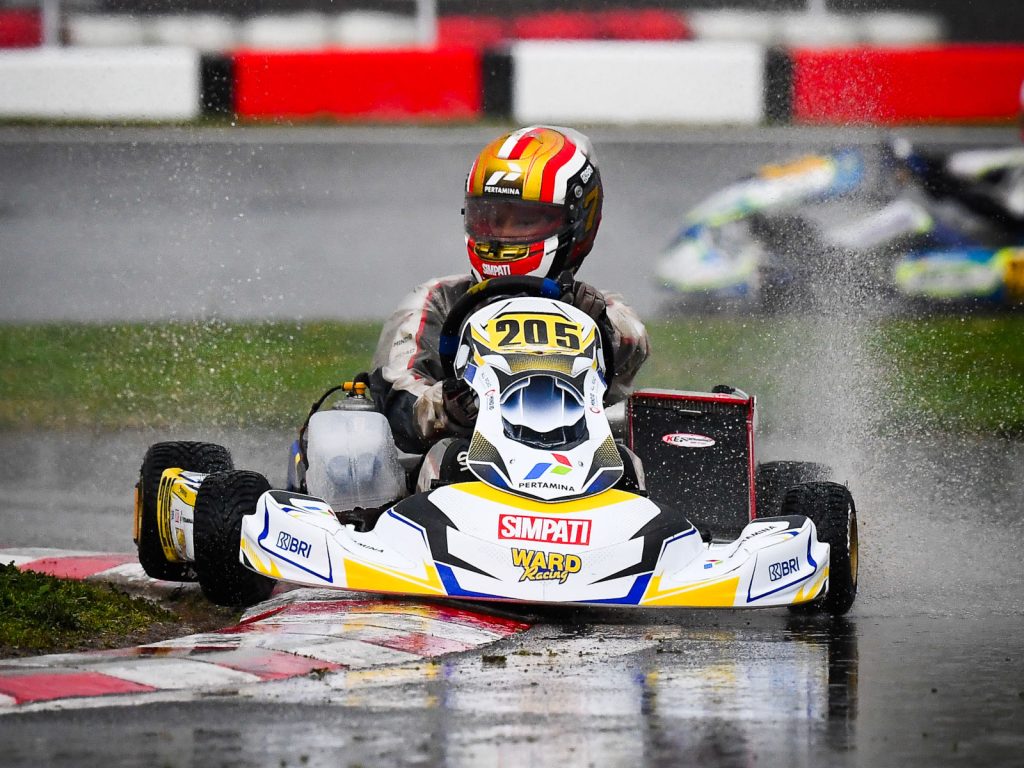
The Big Leap: Transitioning from Karting to Single-Seater Cars
For any race car driver, moving from go-karts to actual race cars is the biggest and most challenging step they will take.
Go-karts are small, very light, and react instantly when you turn the steering wheel. Race cars are much heavier, have complex brakes, and use parts like wings to help them stick to the track.
DriverDB records show that Qarrar Firhand has started this major transition by joining Argenti Motorsport to race in the British Formula 4 (F4) Championship. This move is a big deal because British F4 is known globally as one of the best training grounds for young drivers. By entering this series, the Indonesian Young Racer is taking his first official step into the world of professional car racing.
The Racing Ladder: A Step-by-Step Path to Formula 1
A driver cannot simply jump from a go-kart straight into a Formula 1 car; it would be too fast and too difficult to control. Instead, there is a step-by-step ladder they must climb to learn new skills safely. Qarrar’s path shows a very normal and well-planned progression to help him get used to bigger and faster machines:
Step 1: Standard Karting (OK Class): Racing regular karts without gears to learn the basics of racing lines, passing, and competing in a large pack of drivers.
Step 2: Shifter Karts (KZ2 Class): Moving to karts that have manual gears and stronger brakes, helping the driver get used to shifting and harder stopping power.
Step 3: Formula 4 (F4): The current step. F4 is the entry-level race car. It introduces the driver to driving with a roof over their head (the halo safety device), using suspension that can be adjusted by mechanics, and learning how to communicate with data engineers.
Technical Takeaway: Aerodynamics and Weather Management in the UK
Racing a Formula 4 car in the UK with a team like Argenti Motorsport teaches drivers things they simply cannot learn in a go-kart. One of the biggest new lessons is “aerodynamics.” An F4 car has a front wing and a rear wing.
As the car goes faster, the air pushes down on these wings, pressing the car firmly into the ground. This means that, surprisingly, the car actually has more grip in fast corners than in slow corners.
Drivers have to learn to trust this invisible air pressure. Additionally, they have to learn how to drive in the famous, unpredictable British rain. By learning to trust the aerodynamics and adapting to difficult weather, Qarrar is building a solid, basic foundation on his Road to Formula 1.

